
Blog

Our Process

The Handmade Leather Process Behind Tewtiw Bags

At Tewtiw, our leather bags are handcrafted in Fes by skilled artisans who follow techniques passed down for centuries. From selecting hides to the final stitch, each bag reflects the rich tradition of Moroccan leather craftsmanship.

This article explains the careful process behind our handmade leather bags, including timings, so customers can understand how they are made .

Choosing the right leather

All Tio Tio products are made from goat, sheep, or cow hides— animal hides intended solely for human consumption. These products are cruelty-free, using only hides typically considered a byproduct of the food industry.

We use genuine full-grain leather , which retains its natural surface, including scars, scratches, and other marks. Unlike synthetic leather, genuine full-grain leather is durable and develops a natural sheen over time, giving each bag a unique character.

Types of Leather We Use

Cowhide
Cow leather is thick, strong, and durable, making it ideal for bags that need to carry heavier loads, such as shoulder bags and rucksacks. Cowhide is widely available and versatile for many leather products.


Sheepskin

Sheepskin is known for its softness and delicate texture, making it suitable for lightweight bags, decorative wallets, and leather accessories. It's ideal for products requiring a soft feel, but may not be suitable for heavy use.

Lambskin

Lamb leather comes from young sheep under one year old. It is soft and lightweight, often used in luxury leather jackets, gloves, and delicate handbags.

Goatskin

Goat leather balances softness and toughness. It is supple yet durable, making it ideal for bags and poufs that need both flexibility and longevity. Goatskin is lighter than cowhide but more resilient than sheep leather.

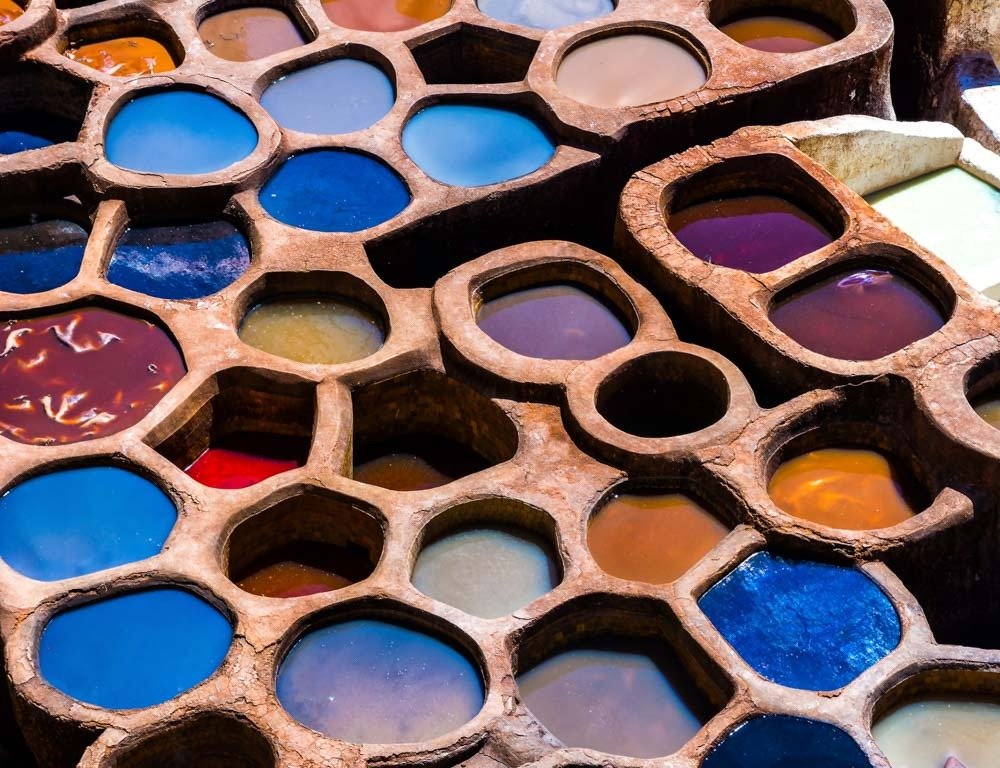
Traditional Moroccan Tanning Process

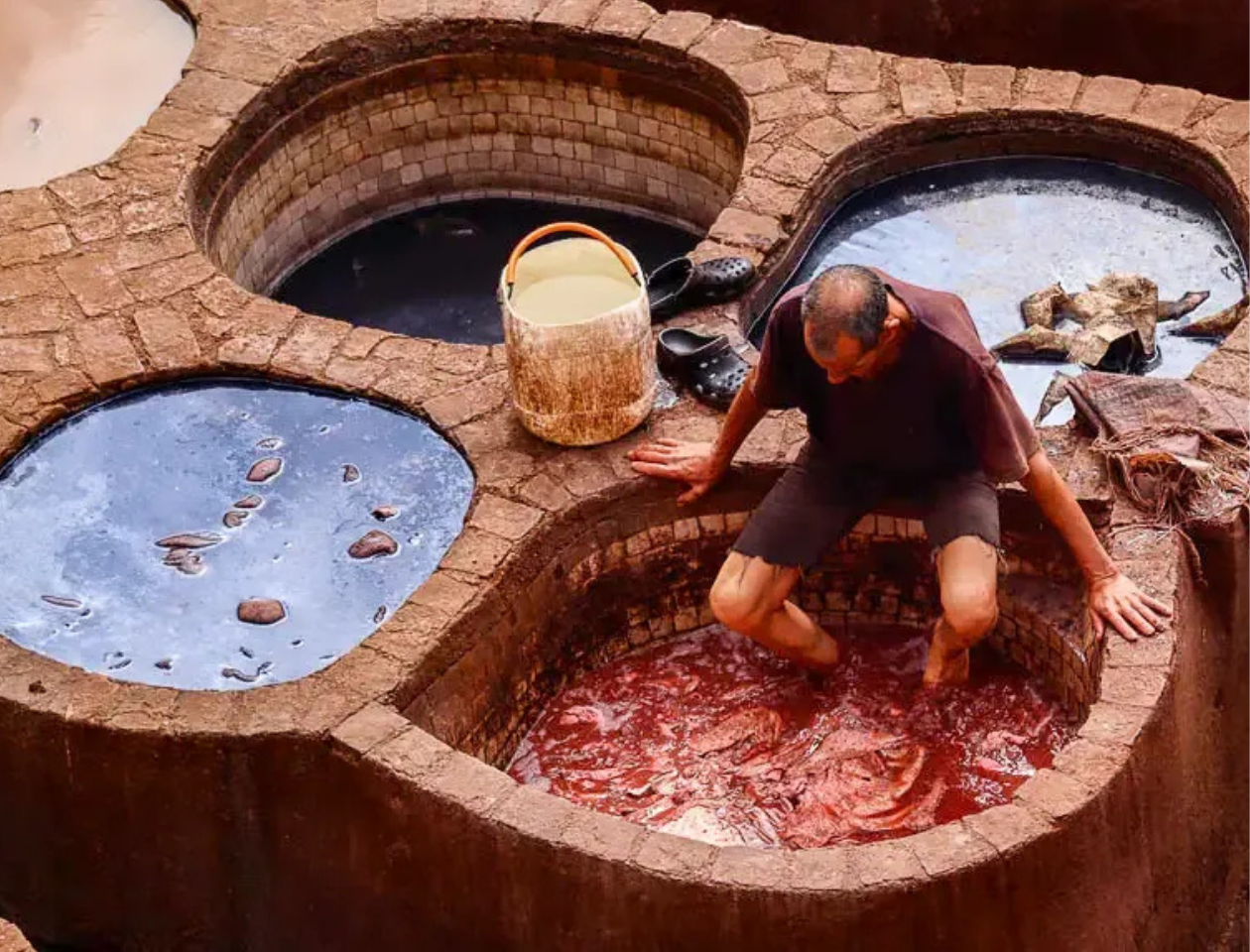
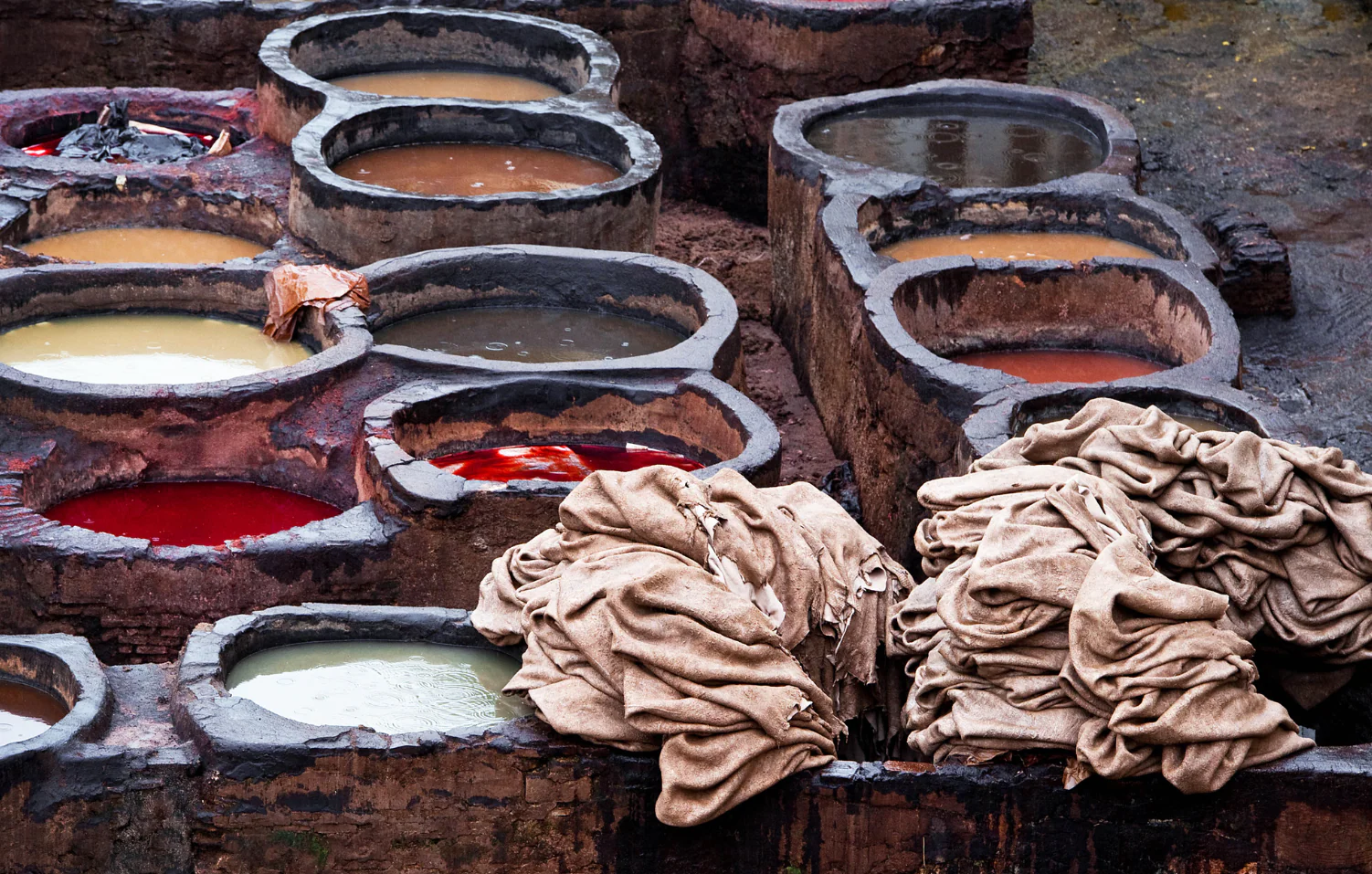
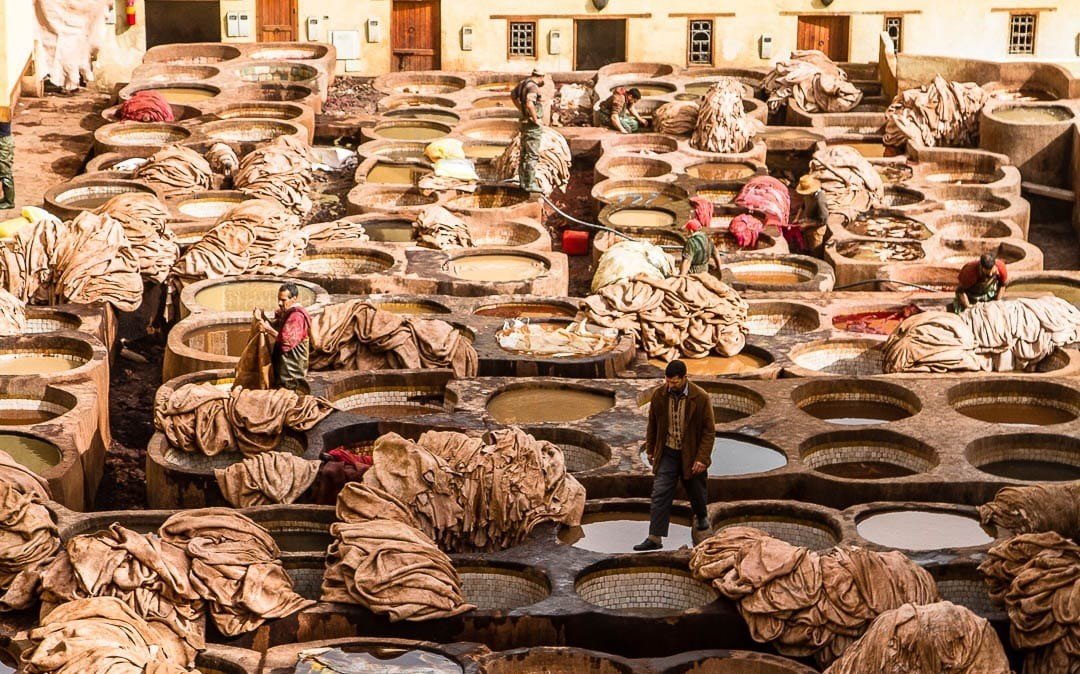
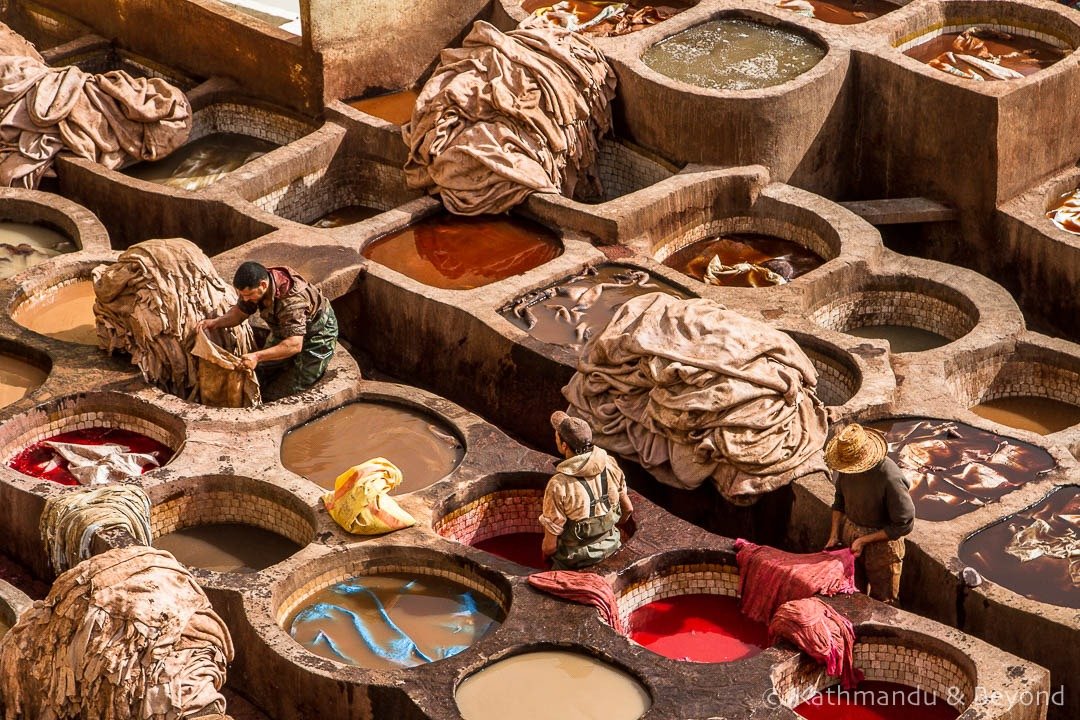
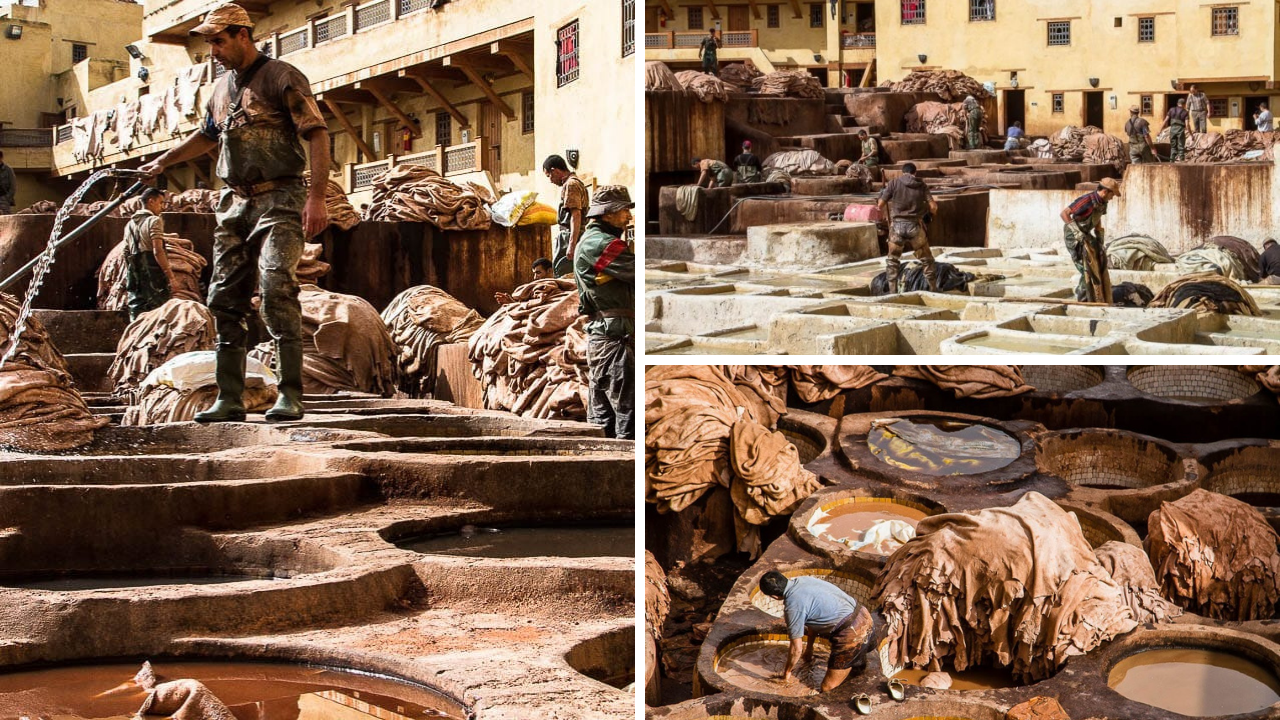
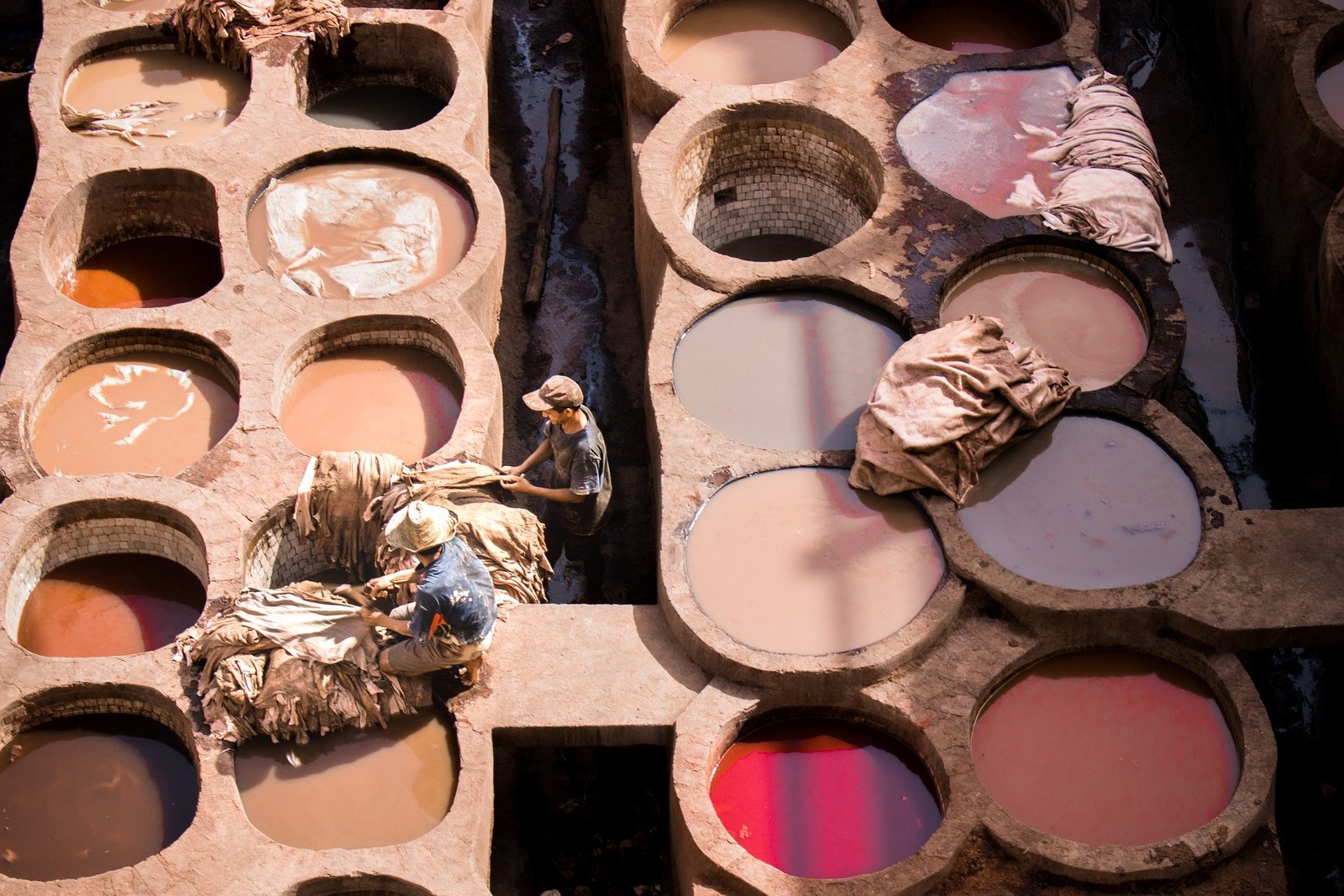
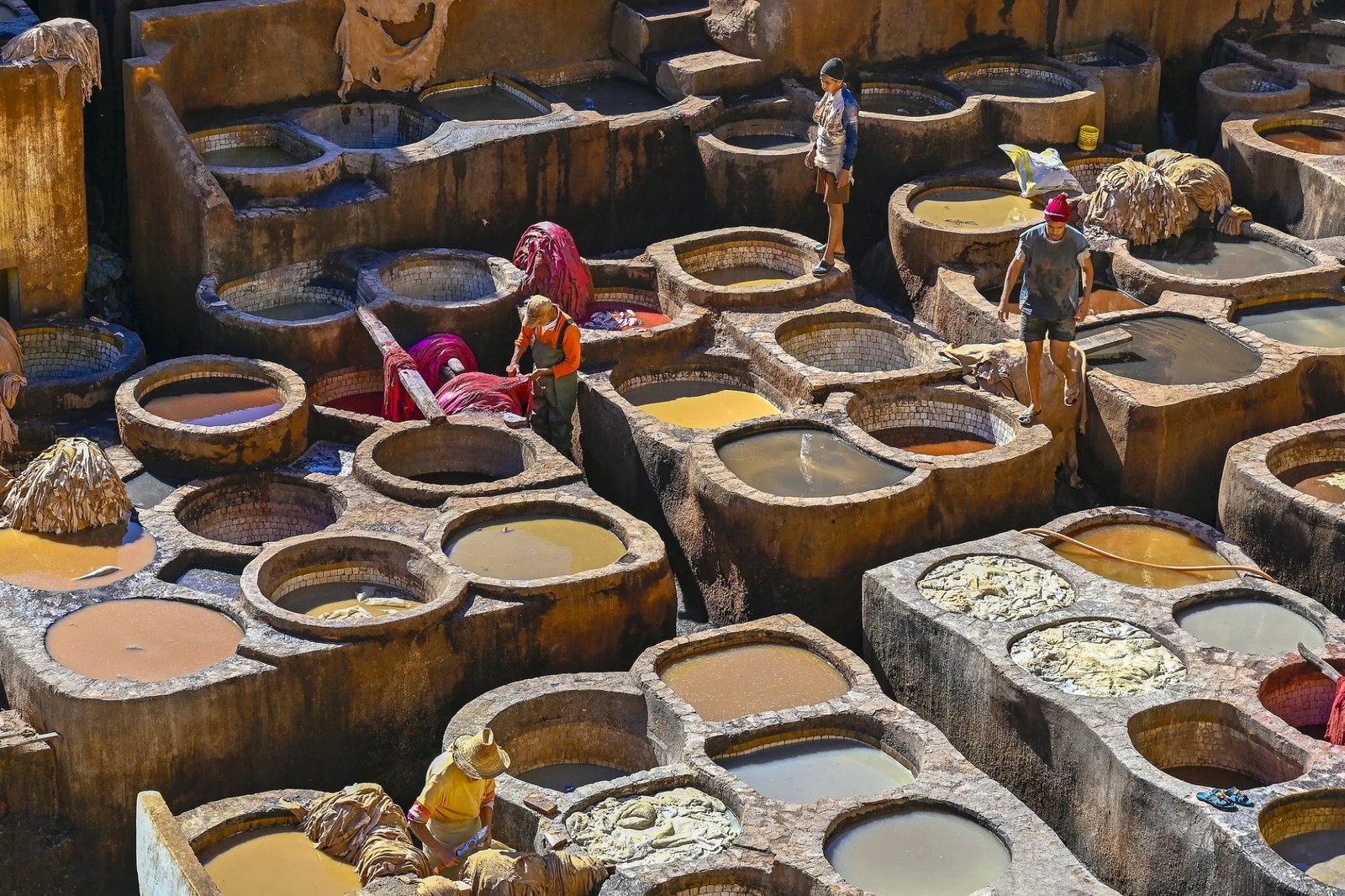
Moroccan leather is tanned using methods developed over centuries. Unlike industrial leather, traditional tanning relies entirely on natural resources and is performed manually. The steps include:

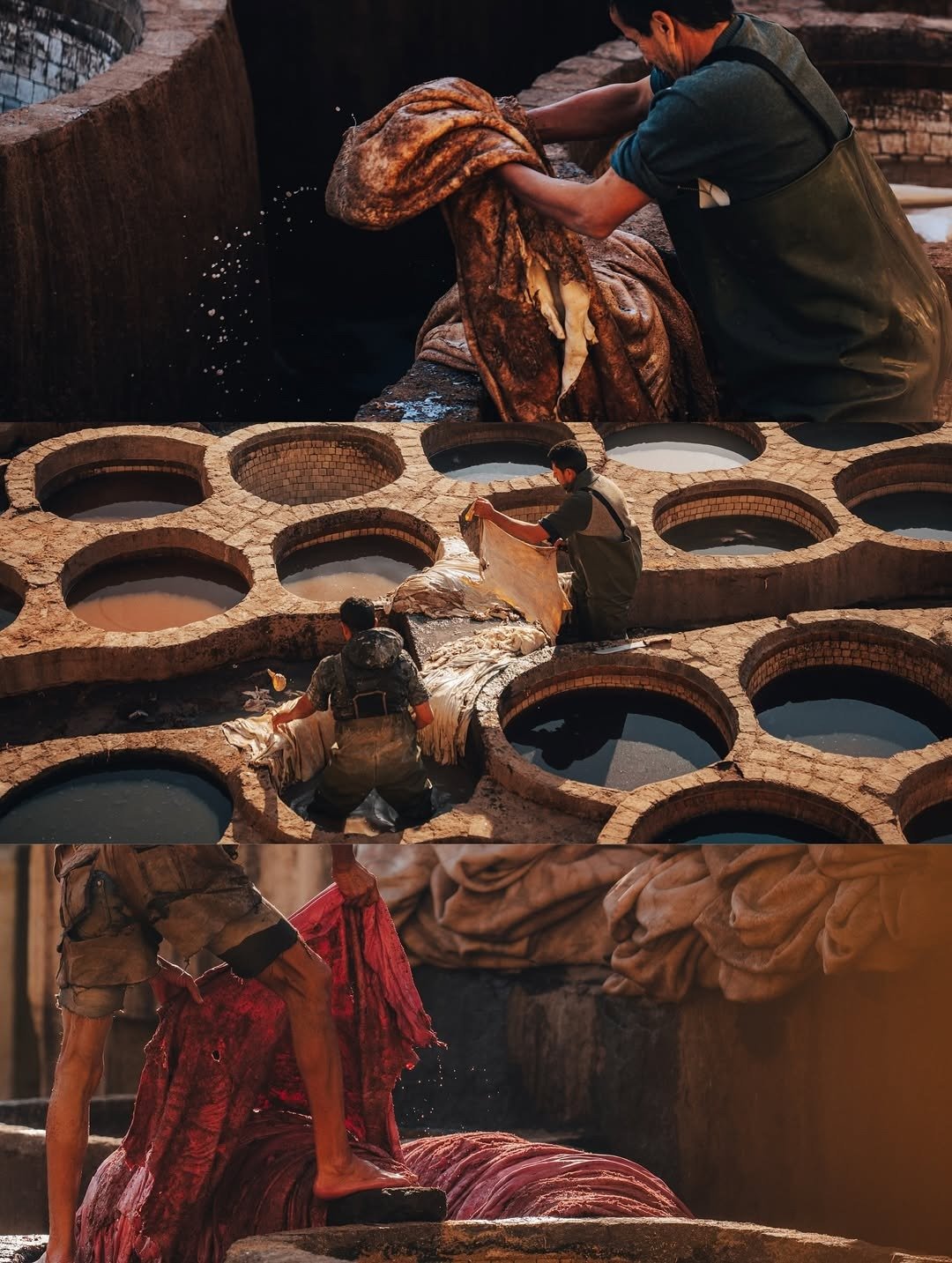
  1. Soaking and Cleaning – Hides are soaked in a mixture of water, lime, and salt to remove impurities, fat, and hair.

  2. Softening – Hides are placed in vats containing natural softening agents such as pigeon droppings, which contain ammonia to make the leather malleable.

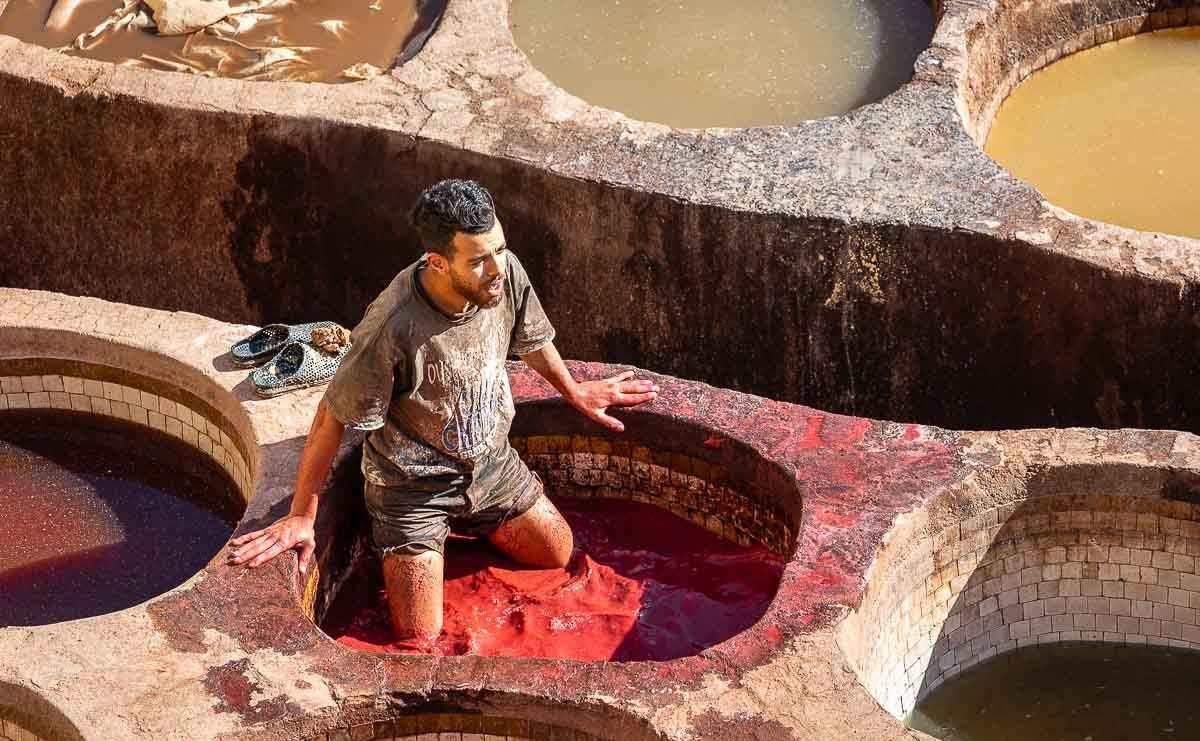
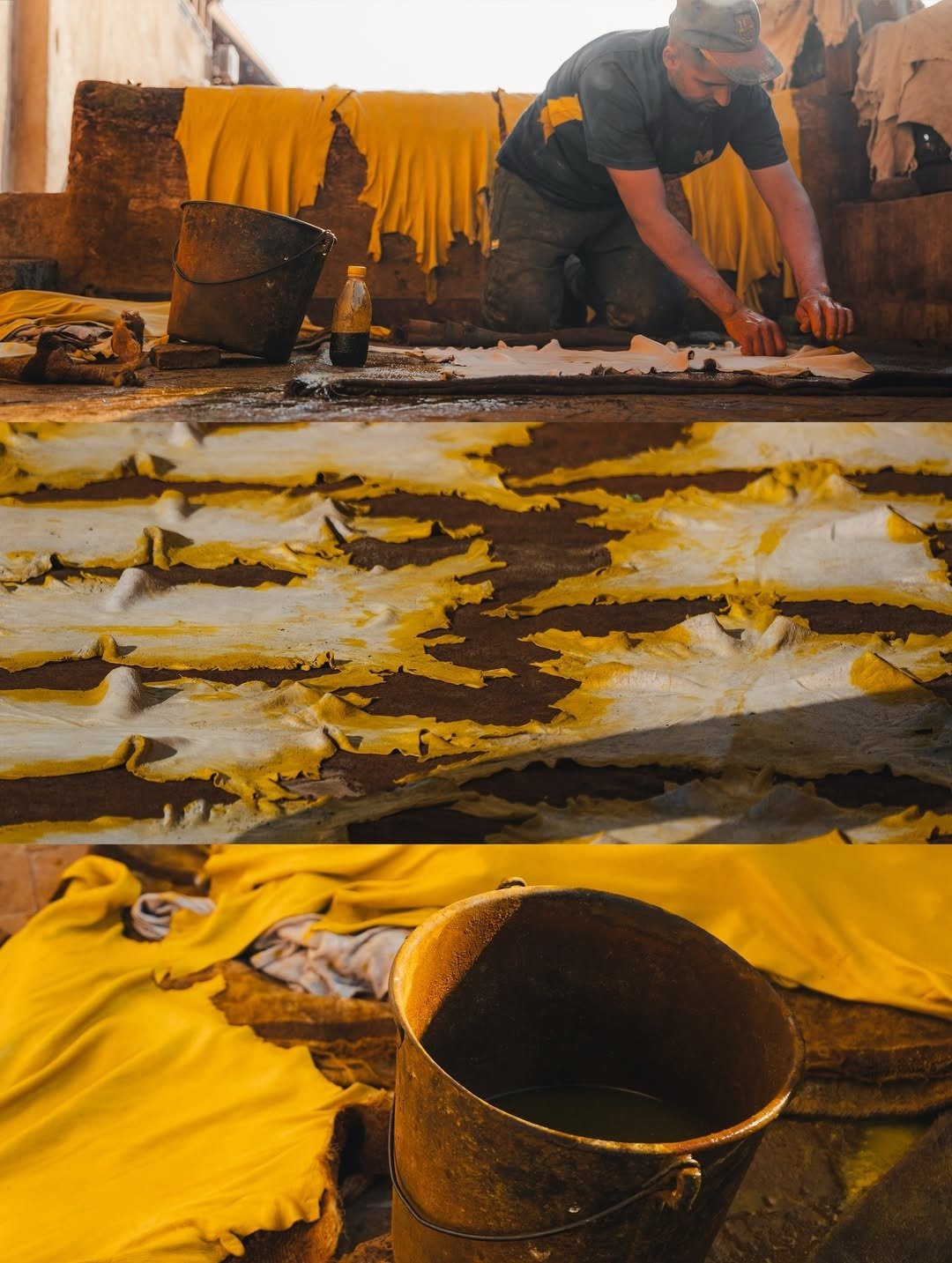
  3. Natural Dyeing – Leather is dyed using plant-based ingredients: poppy for red, mint for green, indigo for blue, henna for orange, and a mix of pomegranate with oil for yellow.

  4. Foot Trampling – Artisans carefully trample the hides to achieve the desired softness and consistency.

  5. Drying – Once tanned and dyed, the hides are left to dry naturally under the sun.

This labor-intensive method ensures that each hide is flexible, durable, and ready for artisan craftsmanship.

Crafting the Bags

Once the leather is prepared, the artisans at Tewtiw begin the bag-making process:

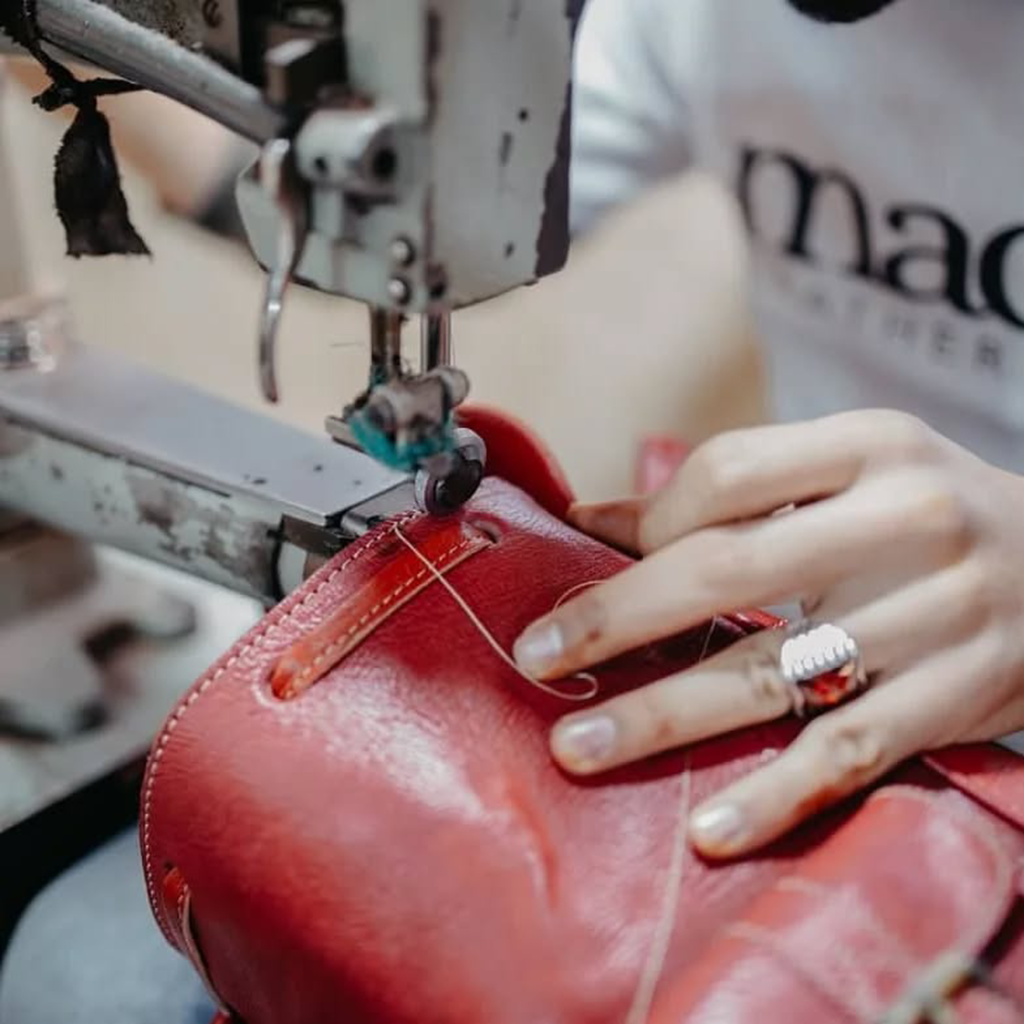
  • Cutting – Each piece is carefully measured and cut by hand.

  • Stitching – Traditional hand-stitching is used to assemble the bag, ensuring strong seams and careful attention to detail.

  • Finishing – Edges are polished, and leather is oiled to reduce odor and enhance softness.

  • Decorating – Some designs feature engraving, painting, or inlay work using colored leather, kilim patterns, gemstones, or metal accents.

Because each bag is handcrafted, small variations in color, grain, or stitching are natural and part of the charm of traditional leather craftsmanship.

The Legacy of Moroccan Leather

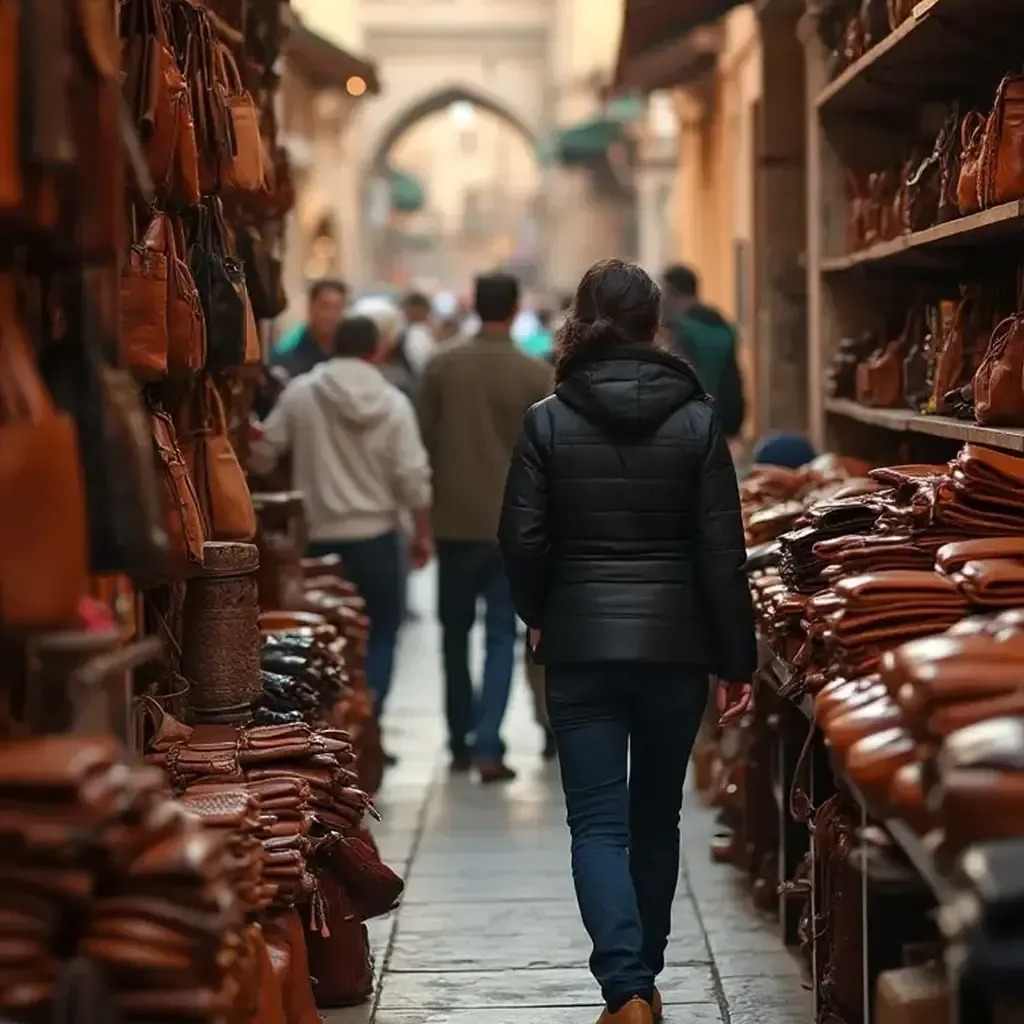
Leathercraft in Fes and other Moroccan cities has been practiced for centuries. Moroccan artisans continue to preserve these techniques, producing leather goods that are valued worldwide for their durability, natural beauty, and handmade authenticity.

By choosing a Tewtiw bag, you support the continuation of these centuries-old traditions and help sustain local artisans in Fes.

Why Handmade Leather Bags Are Unique

  • Durability – Full-grain leather develops a patina over time.

  • Natural Variation – Each hide has its own markings, making every bag one-of-a-kind.

  • Ethical Production – Leather is sourced as a byproduct of the food industry, with no additional harm to animals.

  • Artisan Skill – Each bag reflects hours of careful craftsmanship by experienced artisans.

Conclusion

Creating a Tewtiw leather bag is a journey that starts with hides and centuries of Moroccan tanning and leatherworking tradition. From raw leather to finished bag, every step is done with care, skill, and respect for the craft.

By understanding the process, customers can appreciate not only the quality of their bag but also the heritage of Moroccan leather artistry that it represents.

Visit our social media to learn more about this process (Click here)